The Reverse Centaur's Guide to Life After AI: How to Think About Artificial Intelligence Before It's Too Late
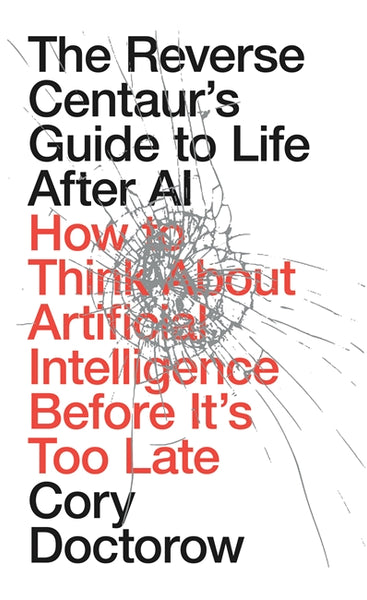
I just finished “The reverse centaur’s guide to life after AI” by Cory Doctorow, published by Verso books.
A science fiction writer like Doctorow, is, in many ways, the perfect person to write a book about artificial intelligence. They know about speculating within and beyond reason, and about dealing with futures that are credible but may never come1.
I have had this book around for a while, dreading diving into more sad news about replacement, and how we are all doomed. When I picked it up, though, I found something else. By moving away from what AI does and towards “who AI does it for, and who it does it to”, Doctorow completely changes the analytical starting point.
The premise is simple: Can we be centaurs (humans assisted by machines to make our work better) or will AI companies convince our employers that they can make us into reverse centaurs (mere reviewers displaced by machines whose jobs can be cut)?
The answer is, obviously, not so straight-forward. But though a plethora of examples, ranging from cancer diagnosis to autonomous vehicles, Doctorow breaks it down until it becomes clear. We are not the target audience of AI companies, our employers are, and big tech needs them to believe their products will reduce labor costs.
While this is already a brilliant contribution, put in very accessible terms, Doctorow goes on to look for solutions in law. He explores copyright, through the lens of consciousness (an exemplary piece of effective writing), and concludes that work produced by AI cannot be copyrighted (in the US) which makes it harder to extract profit from it.
This was a refreshing read, and although some bits became a little repetitive, I found it a fantastic piece to understand the dialectics at play in the current era.
-
Ursula LeGuin was one such author, who was so incredibly in touch with societal dynamics and wrote books that were at the same time incredibly close and incredibly far away from reality (see “The word for world is Forest”). ↩